
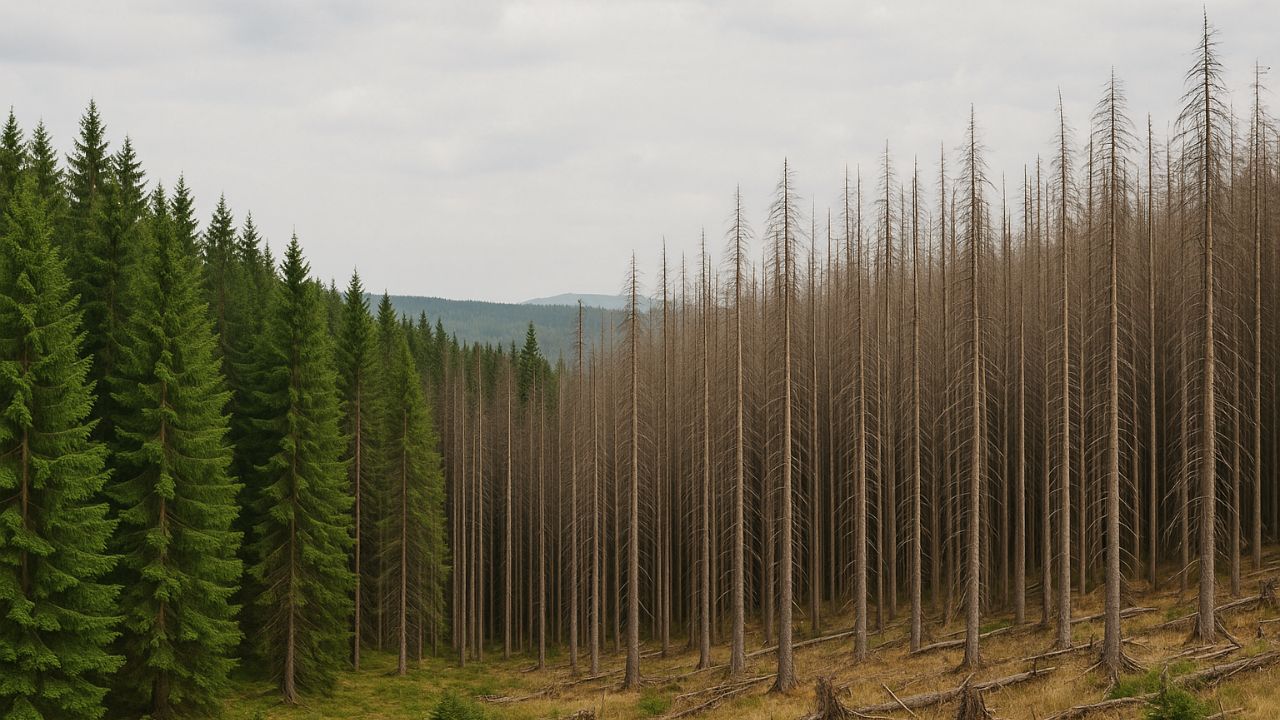
Age of Climate Shifts – The Utah Forest Dynamics Plot (Official Website) is a remarkable long-term research site dedicated to understanding how forests change over time and respond to external pressures such as climate change, human intervention, and natural disturbances. By monitoring thousands of trees across decades, UFDP provides critical data that helps scientists, policymakers, and conservationists understand forest resilience, regeneration, and biodiversity patterns. This project demonstrates how consistent observation and data collection can reveal the hidden stories of forests—stories that are especially important in the age of accelerating climate shifts.
The Impact of Climate Change on Forest Ecosystems
Forests around the world are experiencing transformations at an unprecedented pace due to rising global temperatures, shifting precipitation patterns, and extreme weather events. Climate change is altering species distribution, reducing the growth rates of certain trees, and increasing the vulnerability of ecosystems to pests and diseases. Boreal forests are shrinking, while temperate forests face stress from prolonged droughts and wildfires. In tropical regions, once-stable ecosystems are being pushed to the brink of collapse. These changes not only affect the trees themselves but also the wildlife, water cycles, and human communities that depend on them for survival.
Shifting Tree Species and Biodiversity Loss
One of the most visible effects of climate change is the shift in tree species composition. As temperatures rise, some species migrate to higher elevations or latitudes where conditions are more favorable. However, not all species can adapt or relocate quickly enough. This imbalance leads to biodiversity loss and disrupts the delicate balance of forest ecosystems. For example, coniferous trees in colder regions are being replaced by deciduous species, altering habitats for birds, insects, and mammals. Biodiversity loss not only weakens forests but also reduces their ability to capture carbon, thus worsening the climate crisis in a dangerous feedback loop.
Forests and Human Livelihoods
Forests are central to human survival, providing oxygen, food, timber, and medicines, while also regulating water supplies and absorbing carbon dioxide. With climate shifts, communities that rely heavily on forest resources are at risk. Deforestation for agriculture, coupled with climate-induced forest degradation, exacerbates poverty and food insecurity in many regions. Indigenous communities, who depend deeply on forests for cultural and economic sustenance, are among the most vulnerable. Protecting forests is therefore not only an environmental necessity but also a social and economic imperative.
The Role of Technology and Citizen Science
To counter these threats, technology and citizen science initiatives are becoming vital tools. Remote sensing, satellite imagery, and artificial intelligence now allow for large-scale monitoring of forest health and deforestation. Citizen science projects, where local communities and individuals contribute to data collection, add valuable insights into real-time forest changes. Platforms like UFDP inspire such collaborations by showing how long-term data can shape smarter forest policies. These efforts empower people to take an active role in conservation while fostering awareness about the challenges forests face in the age of climate change.
Building a Future of Forest Resilience
Despite the challenges, there is hope for forests if collective action is taken. Reforestation and afforestation projects, sustainable forest management, and global cooperation can restore degraded lands and strengthen forest resilience. International agreements such as the Paris Climate Accord emphasize the need for protecting and expanding forests as carbon sinks. At the local level, education, community-driven conservation, and the integration of indigenous knowledge are crucial in ensuring forests remain vibrant for future generations. Forests are living testaments to resilience, but only if humanity recognizes its responsibility to protect them against the pressures of a changing climate.